🚢 The History of Container Shipping
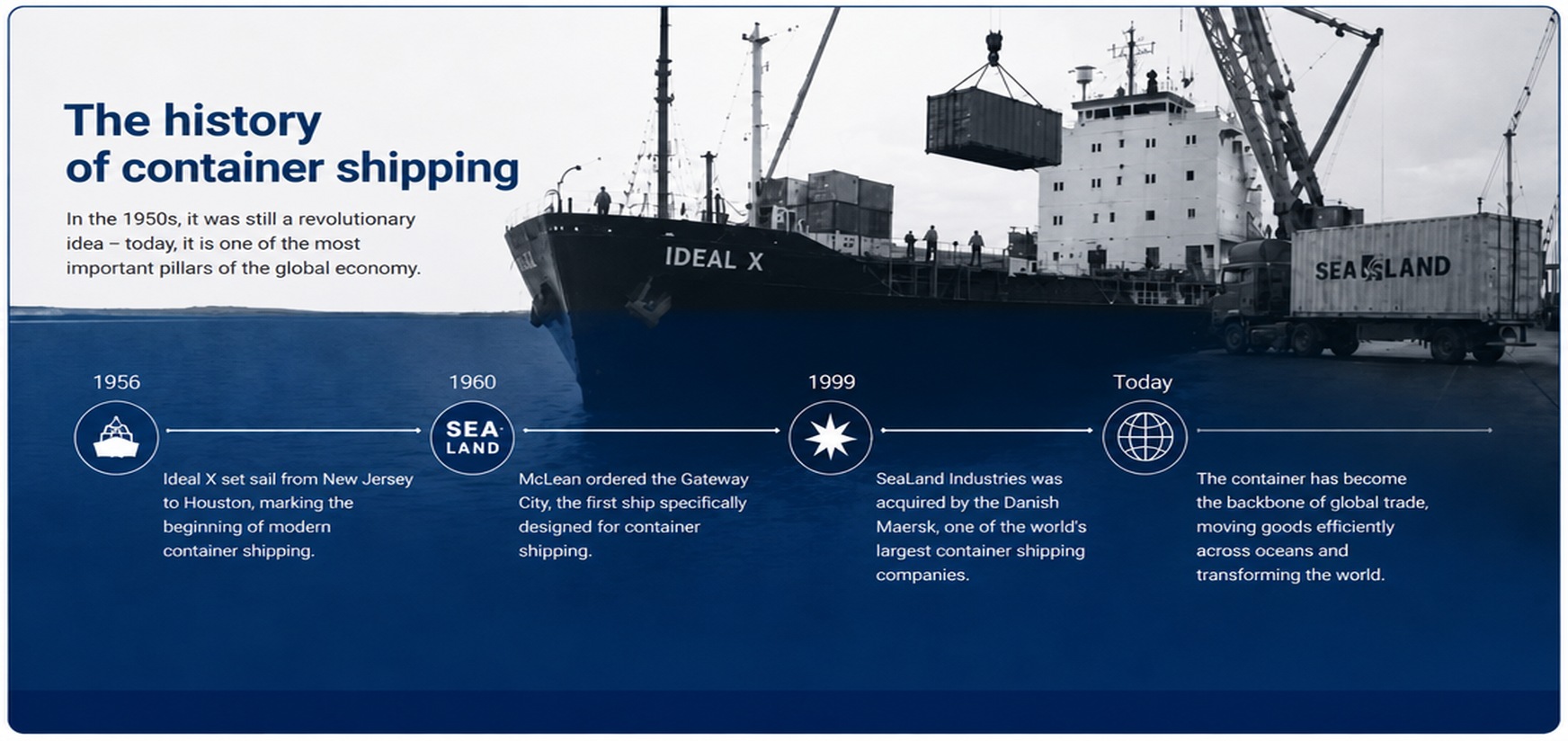
Today, container shipping is the most popular mode of freight transport and one of the most important pillars of the global economy, yet in the 1950s it was still just a revolutionary idea. It's worth looking back at how the first container was born, the first container ship, and how modern container shipping came to be.
📦 The Beginnings
American Malcolm McLean (1913–2001) founded his own trucking business in 1934, starting out with the purchase of a single used truck. His business grew quickly, but he soon realized that the loading processes of the time were slow, costly, and extremely labor-intensive.
McLean's idea was simple: instead of loading cargo piece by piece, it should be possible to transfer it between modes of transport in a single standardized container. This idea fundamentally changed the world's logistics.
🚢 The First Container Ship
The most significant milestone in the history of container shipping is April 26, 1956, when the Ideal X, a ship of the Pan-Atlantic Steamship Company, set sail from the port of New Jersey toward Houston, carrying standardized containers on board.
This voyage can be considered the beginning of modern container sea freight.
After the successful first voyage, McLean commissioned a ship named Gateway City, which was designed specifically for container transport. In 1960, the company continued operating under the name SeaLand Industries and became one of the defining pioneers of container logistics.
🌍 The Container Revolution
The introduction of standardized containers radically transformed international freight transport. Loading times were significantly shortened, transport costs decreased, while safety and reliability of shipping increased.
Containers made it possible for the same unit to travel by truck, rail, and ship without interruption, giving rise to the logistics system on which today's global trade is built.
In 1999, SeaLand was acquired by the Danish company Maersk, which remains one of the world's largest container shipping companies today.
⚓ Today
Today, the vast majority of world trade is carried out in containers. The standardized container not only accelerated international freight flow but also enabled the formation of the global supply chains on which the operation of the modern economy is built.